
Pilgrimage and Retreat - What's the difference?
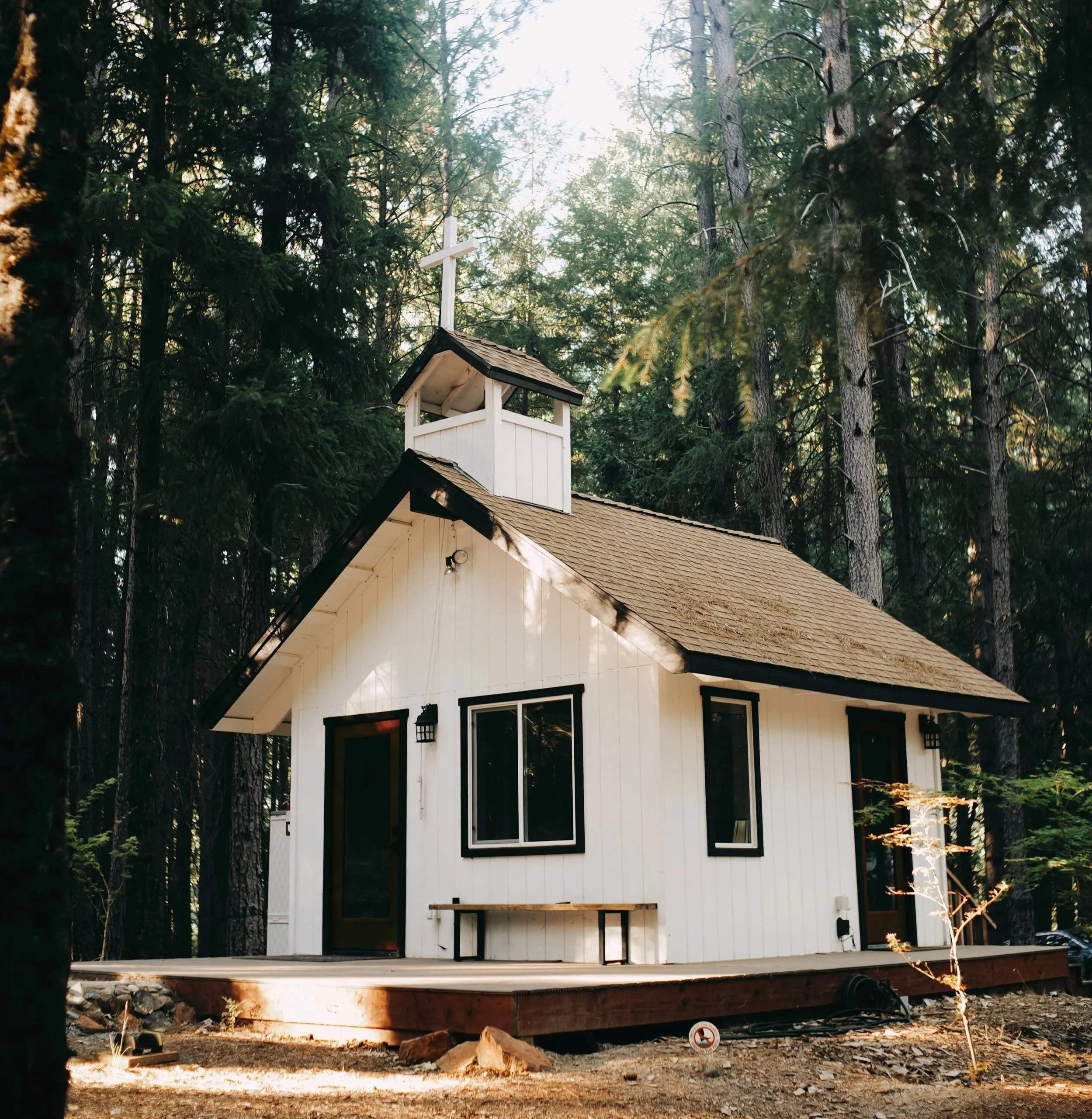
Village Chapel - Photo credit: Rob Bergman
Iona House is a monastic-inspired center for Christian formation. Our campus offers a unique setting shaped by the communal rhythm of life oriented to Christ continuously unfolding here.
Increasingly we are wondering if Iona House is less of a place of retreat and more of a place of pilgrimage. The dynamics we are observing are leading us to a new way of describing what God is up to here. While the two (retreat and pilgrimage) share much in common, they have distinctive emphases.
I’ve been reading a lot about the nature of pilgrimage the past month or so as we’ve been grappling with how to talk about this sharpening conception of our identity. Not everyone will easily connect with the idea of pilgrimage. Pilgrimage might sound off-putting to some; a bit foreign - something medieval perhaps. Others might ask: is pilgrimage even a Christian idea? Though I’ve had a few questions myself, my research has convinced me pilgrimage is INDEED a deeply Christian notion… and, in fact, one that should not be ignored.
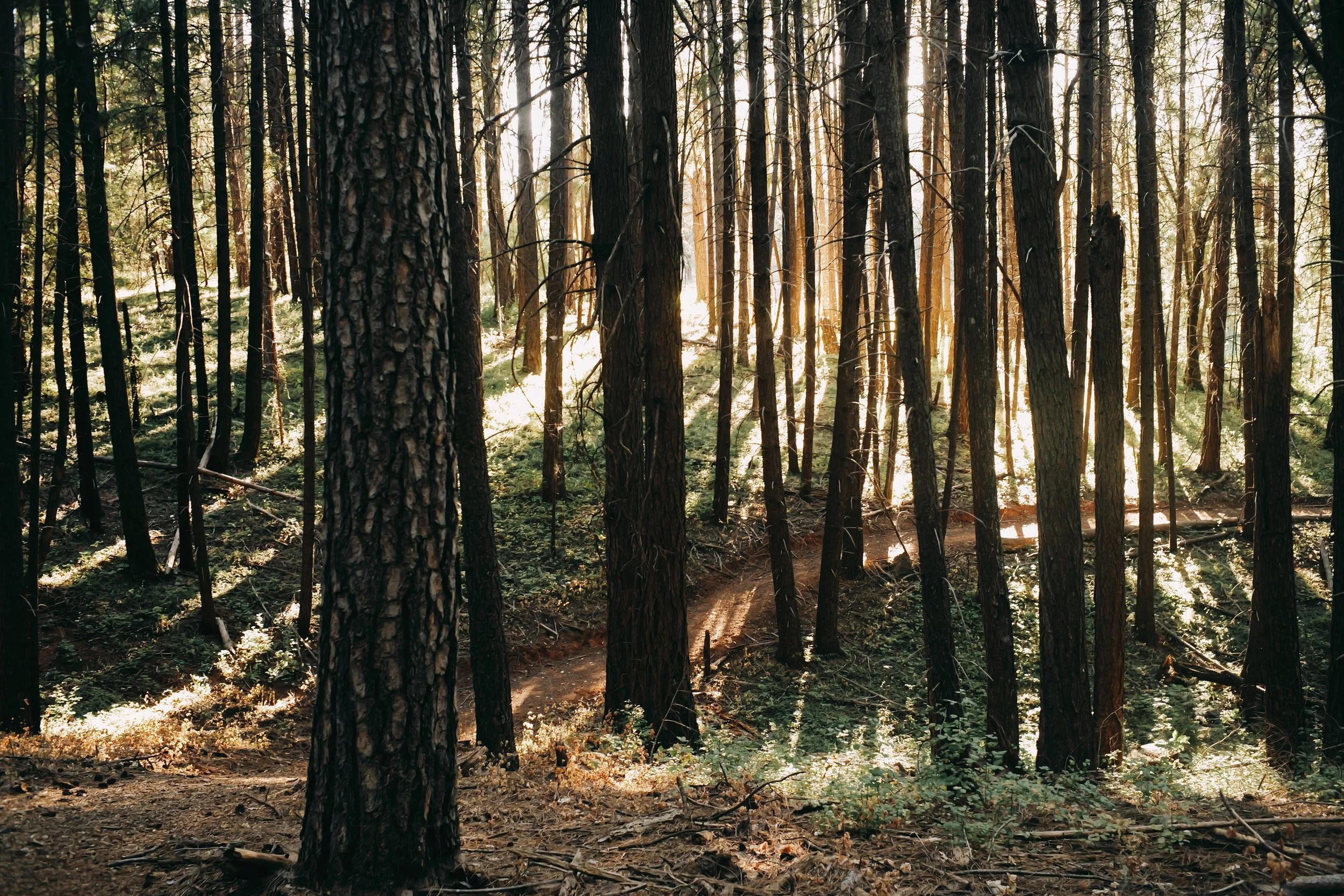
Prayer Trail at Iona House - Photo credit: Rob Bergman
What is a pilgrimage?
A pilgrimage might be most simply defined as a journey to a holy place.
I love the description of a pilgrimage given by Joseph Ratzinger (Pope Benedict XVI) - “To go on pilgrimage is not simply to visit a place to admire its treasures of nature, art or history. To go on pilgrimage really means to step out of ourselves in order to encounter God where he has revealed himself, where his grace has shone with particular splendor and produced rich fruits of conversion and holiness among those who believe.”
This description of pilgrimage resonates with what people tell us about their experience of Iona House. We don’t have any relics; no historic saints have ventured here; and yet, God seems to consistently meet people in this place. It is increasingly becoming, as the Celtic Church described such places, “a thin place” - where the membrane between heaven and earth seems more translucent, where God’s presence and glory shine through.
Historically speaking, pilgrimage is an ancient practice. We have records at least as far back as the 3rd century of Christians making pilgrimage to places such as Jerusalem that carry historic, biblical significance. But equally, we have ancient records of people making pilgrimage to visit non-historical places such as monasteries or a journey to visit a wise and deep Christian sage such as St. Anthony the Great who lived in the desert of Egypt (one of the original Desert Fathers). Making a journey for a spiritual purpose became quite common, especially in the medieval period.
However, behind all of this is the far more ancient practice seen in the Old Testament where God commanded the people of Israel to make pilgrimage a central part of their spirituality. Three times a year they were to make a journey to celebrate a sacred festival: Passover, Shavuot (First Fruits / Pentecost), and Sukkot (feast of Booths). This was a vital part of the formation of their identity as YHWH’s people.
The communal nature of the historic, biblical pilgrimage was vital. The pilgrims journeyed precisely in order to step out of themselves and become worshipers and participants in a larger communal rhythm of life entirely focused on God. It must have been a potent experience of formation - communal prayer times at the tabernacle / temple, fellowship, meals together, stories, connections, and more. Perhaps it wasn’t accidental that it was on one such pilgrimage that 12-year-old Jesus had a clarified sense of who He really was (that His Father was in fact YHWH) - see Luke 2:41-52.

Cooking a communal meal at the Village Barn - Photo credit: Rob Bergman
What is the difference between a retreat and a pilgrimage?
In both a retreat and a pilgrimage, a person leaves home. In a retreat the focus is on withdrawal from any number of dynamics (people, responsibilities, distractions, etc.). In a pilgrimage the focus is on the journey toward something. One author captures this difference by comparing the secular notion of a vacation with that of tourism. Tourism is about going to see something - a place, an event, an experience. Vacation is not particularly about what you do but what you don’t do: namely, work. This concept of a vacation can be traced back to its Latin root “vacare,” meaning “an emptiness, a time of freedom, a loosening of the bonds of duty and labor that bind us in other times. (We get the same Latin root in vacuum and vacancy.)... Vacation is meant to be empty time: time filled with good things, certainly, but time empty of anxieties and burdens.” (Clinton Sensat, By a Different Way, pg. 13). There is a similar parallel between retreat and pilgrimage.
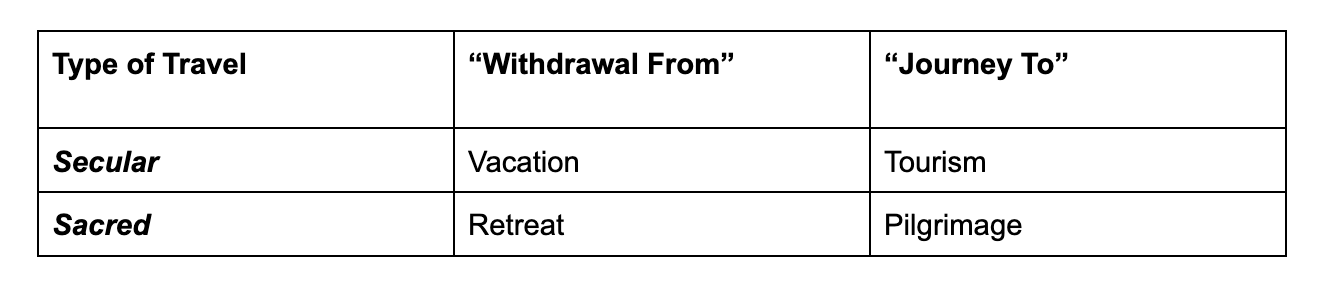
There is value in both the secular notion of vacation and in the spiritual notion of retreat. All of us need times set aside to cease work, remove distraction, and create space. This is important. But it is helpful to distinguish the purpose of a retreat with that of a vacation or with a pilgrimage. Again, Clinton Sensat:
Retreats are more like vacations than pilgrimages are. They involve an emptiness, a vacating, just as vacations do… but there are stark differences between them as well. Retreats are not for relaxation. They’re for sacred silence and deep intimacy with the Lord. Retreats can be tiring… Retreats have their origin in the experience of the wilderness running through the Scriptures. Throughout the Bible, people leave large crowds to pray in empty places.”
So, retreats are not vacations. They’re quite different. Similarly, a pilgrimage is not tourism. “Many people who consider themselves pilgrims may in fact be religious tourists… Tourists seek to see; pilgrims seek God. A pilgrimage is not merely travel to religious places; it is travel that is essentially religious, travel as a religious act, travel as an act of worship.” (Sensat, 22-23)
Sensat further distinguishes between tourism and pilgrimage. “A tour means a circuitous journey - you return to the place you began, maybe a little more polished, but basically the same. A pilgrimage is not around, but through - not a circle, but an arrow! A pilgrim does not return as they began; they make progress.” (Sensat 63-64)
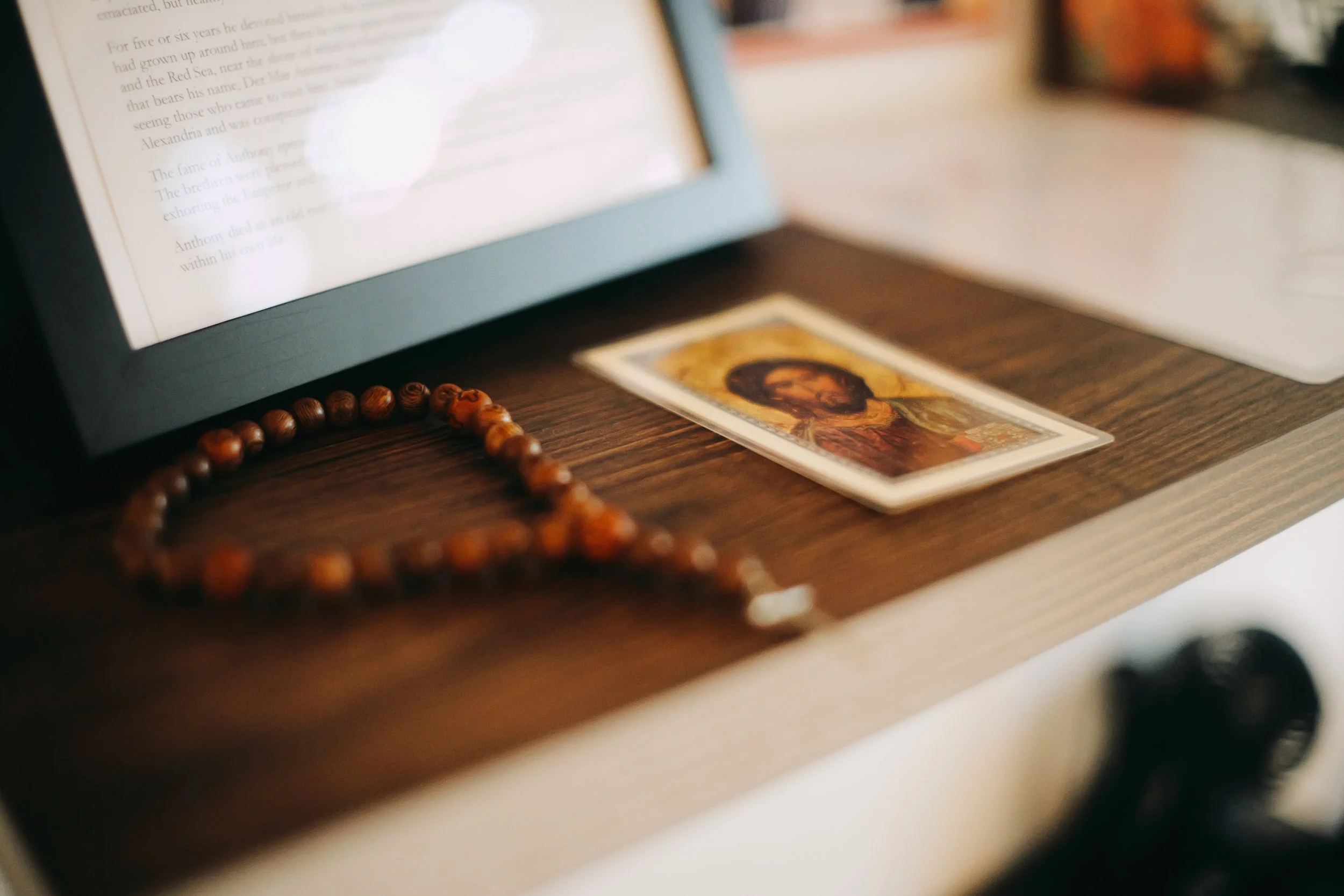
Inside a prayer hut - Photo credit: Rob Bergman
So why does all of this matter? The above is not a critique of vacations or tourism, which have their place. And it is certainly not a criticism of retreats, which have played (and continue to play) a vital role in the formation of God’s people and continue to transpire on our campus. It’s simply an invitation to consider a different framework for what we are doing at Iona House. The notion of a pilgrimage speaks to the communal nature of our campus - that it is an inhabited place that operates collectively. It is not vacant or empty. It is full of the life and vitality of a community of people who are living into a shared rhythm of life. As Christian George puts it in an article entitled, The Discipline of Christian Pilgrimage: “True pilgrimage leads to communion.”
I believe, increasingly, this is the primary experience of guests at Iona House. - We are seeking God together and are moving toward communion. This is why many of our weekend guests choose to join the Iona House Residents and Staff and local community at All Saints Church (which is our liturgical / sacramental partner that meets off-campus in Placerville) for Holy Communion on Sunday mornings. To be on pilgrimage is to worship with the local Christians where you travel to. As Sensat puts it: “You might have pictured pilgrimage as a profoundly individual exercise. But that’s not true… A pilgrim may travel without companions, but he is never alone. That is because a pilgrim is making concrete in his or her life the reality of the Church.” (Sensat, 57)
Practically speaking, we have found that groups that come together to experience Iona House might best understand themselves as pilgrims on a shared pilgrimage. Just as pilgrims in ancient times often traveled as a group to a particular pilgrimage site, so now small groups, families, groups of friends find themselves traveling to Iona House - not in order to find emptiness and vacancy, but the life of a worshiping community. One can find vacancy at any Airbnb. But what can’t be found at an Airbnb is an entire little village operating entirely in reference to Christ. For that you must become a pilgrim and step out of yourself and enter into something much larger. This is the vision of Iona House - a monastic-inspired center for Christian formation.
As a clarification, an individual can come to Iona House and still experience a pilgrimage. You don’t need to come with others. Others are here. And you can join them by entering into the common life of Iona House - the prayers, the physical work, the silence, the communal spiritual direction, the fellowship, the fasting, and the feasting.
Increasingly we are inviting people to consider when they come to Iona House whether the Lord is leading them into more of a retreat (i.e. a time focused on the disciplines of withdrawal - silence, solitude, stillness, fasting) or that of a pilgrimage (i.e. a focus on joining into the common life unfolding, which of course still includes many aspects of withdrawal - silence, solitude, removal of distractions such as internet / screens, etc.).
Whether for retreat or for pilgrimage, we look forward to welcoming you into a holy place set aside for total attentiveness to Christ. May the Lord meet you in powerful and transformative ways in your time here.